

Overview
Women's hormonal abnormalities are on the rise, and PCOD and PCOS are two terms that frequently cause confusion. Polycystic Ovarian Disease (PCOD) and Polycystic Ovary Syndrome (PCOS) are prevalent conditions affecting reproductive-aged women. Although their symptoms coincide, and even though they both reflect disorders that impact ovarian health, they are not the same. Knowing the difference between PCOD and PCOS, as well as their symptoms, causes, and treatment options, allows women to take timely action to improve their health.
This blog will tell you in detail about PCOD vs PCOS, including its diagnosis, symptoms, and treatment options. This blog can assist you on your path to better health, regardless of whether you are exhibiting symptoms or simply wish to study for your own sake.
Introduction
Because PCOD and PCOS both impact the ovaries and involve hormone imbalances, there is a great deal of misconception regarding the two conditions. But they are very different, especially when it comes to the origin, the consequences, and the long-term effects on health and fertility. Women who have PCOS have higher levels of male hormones than those who do not have this condition. Due to this imbalance, women skip their periods, which makes becoming pregnant more difficult.
This blog helps you learn about the differences between PCOD and PCOS, their shared symptoms, and the methods for treating them - so you can take steps for your health and fertility.
What is PCOD?
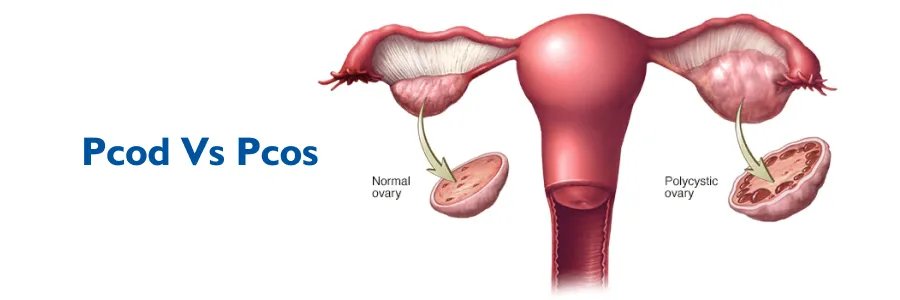
PCOD (Polycystic Ovarian Disease) is a medical condition in which the ovaries produce a lot of immature or partly mature eggs, which later become ovarian cysts. This results in enlargement of the ovaries and production of a large amount of male hormones (androgens), which affect the female reproductive system, causing PCOD symptoms such as infertility, irregular periods, hair loss, and abnormal weight gain.
- PCOD is more common than PCOS.
- It is generally thought to be less serious and easier to manage.
- Women who have PCOD usually have normal ovulation and can naturally get pregnant after making lifestyle changes.
PCOD is mainly caused by lifestyle factors such as a poor diet, lack of exercise, and stress.
What is PCOS?
PCOS (Polycystic Ovary Syndrome) is a metabolic condition that women develop when they experience hormonal imbalances in their reproductive years. Women may miss their periods and may have irregular ovulation during periods, leaving them no opportunity to conceive.
- Irregular Periods: Periods may be delayed or unpredictable.
- Mild Acne or Oily Skin: Caused by slight hormonal imbalances.
- Weight Fluctuations: Weight may vary, but is generally manageable.
- Cysts in Ovaries: On ultrasound, multiple immature follicles can often be seen.
Key Differences Between PCOD and PCOS
Let’s try to understand the difference between PCOD and PCOS through the table below:
| Feature | PCOD | PCOS |
|---|---|---|
| Full Form | Polycystic Ovarian Disease | Polycystic Ovary Syndrome |
| Severity | Generally less severe, responds to lifestyle changes | More complex, long-term medical management |
| Egg Release | Irregular, but ovulation occurs | Ovulation often absent |
| Fertility Impact | Usually not significantly affected | Can cause infertility due to hormonal/metabolic issues |
| Hormonal Imbalance | Mild and manageable | More pronounced, elevated androgen levels |
| Weight Gain | Less common | More common, around the abdomen |
| Associated Conditions | Rarely serious | Increased risk of diabetes, heart disease, insulin resistance |
Common Symptoms of PCOD and PCOS
It is important to identify the signs of PCOD and PCOS so that you can receive treatment promptly and effectively. While they both affect the ovaries, the consequences can vary significantly from mild to severe. Below are the criteria to help decode the differences between PCOD and PCOS.
PCOD Symptoms
- Irregular Periods: Periods may be delayed or unpredictable.
- Mild Acne or Oily Skin: Caused by slight hormonal imbalances.
- Weight Fluctuations: Weight may vary, but is generally manageable.
- Cysts in Ovaries: On ultrasound, multiple immature follicles can often be seen.
PCOS Symptoms
- Irregular or Missed Periods: Often linked to a lack of ovulation.
- Excessive Facial/Body Hair (Hirsutism): Due to elevated androgens.
- Severe Acne: Hard to control and keeps coming back.
- Hair Thinning or Hair Loss: Especially at the crown or front of the scalp.
- Weight Gain: Especially around the belly area.
- Difficulty Conceiving: A common concern needing PCOS treatment.
A doctor might be able to help you better control your symptoms if they are detected early. Consult a doctor to determine the best course of action for treating PCOD or PCOS.
Causes and Risk Factors
PCOD Causes
- Hormonal imbalance: Hormonal alterations, such as estrogen and progesterone, lead to the irregular release of eggs.
- Poor diet and lifestyle: Ovarian dysfunction can result from a diet that is high in processed foods and a lack of physical activity.
- Genetic predisposition: The likelihood of getting PCOD is increased by a family history of the disorder.
PCOS Causes
- Insulin resistance: Cells are not responsive to insulin; therefore, there is excessive insulin and androgen production.
- High androgen levels: An increase in male hormones will prevent proper ovulation and may cause acne and unwanted hair.
- Genetics and obesity: The hormonal imbalance and metabolic state will be worsened by inherited genes and extra body fat.
Both conditions are influenced by a mix of genetic, hormonal, and lifestyle factors, but PCOS tends to involve more complex metabolic issues.
Diagnosis of PCOD and PCOS
PCOD or PCOS includes physical findings affecting body systems, with the diagnosis made through a blood test or imaging. As part of the diagnostic process, the gynaecologist may ask about symptoms such as irregular periods, as well as unwanted male-pattern hair growth on the woman’s face, chest, and back, facial acne, or thinning of scalp hair. The gynaecologist will also want to know the medical history, current eating and drinking habits, and if the woman is taking any prescription or over-the-counter medications, and/or supplements, including vitamins.
To diagnose a woman for PCOD or PCOS, a gynaecologist will consider:
- Medical history: Review of menstrual irregularities, weight changes, acne, and excessive hair growth.
- Physical examination: Checking BMI status and skin/hair condition.
- Blood tests: To measure hormone levels (testosterone, LH, FSH, insulin).
- Ultrasound scan: To assess for cysts and the size of the ovaries.
- Pelvic exam: May be performed to rule out or exclude other possibilities.
A diagnosis is important because it allows the woman to seek timely treatment of PCOD or PCOS, and can help prevent long-term implications.
Treatment and Management Options
Lifestyle Changes
The most important line of defence for both conditions is leading a healthy lifestyle.
- Balanced diet and regular exercise: Leading a healthy lifestyle and exercising regularly each day is going to help balance hormones and support ovulation.
- Weight management: Losing a modest 5–10% of body weight reduces symptoms and restores menstrual cycles.
- Stress reduction: Yoga, meditation, and other techniques to lower cortisol can improve hormonal balance.
Healthy lifestyle habits are critical in improving insulin sensitivity and balancing hormones.
Medical Treatments
Treatment cases vary based on symptoms, goals for fertility, and the severity of symptoms:
- Birth control pills to regulate periods: Oral contraceptives control menstrual cycle irregularities and can help reduce excess hair and acne.
- Anti-androgen medications: These medications reduce male hormone levels, helping manage hirsutism and thinning hair.
- Metformin for insulin resistance: Certain medications used in treating PCOS improve insulin sensitivity and may restore ovulation.
- Fertility treatments for planning pregnancy: Medications or assisted reproductive techniques help women with PCOD or PCOS become pregnant.
- Ovarian drilling or laparoscopic procedures: Rarely recommended, only in resistant PCOS cases.
Whether it’s PCOD treatment or PCOS treatment, it must be customised for the individual.
Conclusion
Conclusion Recognising the differences between PCOD and PCOS is your first step to managing your reproductive and overall health. The primary difference between PCOD and PCOS is in their severity, risk factors, and health risks. The good news is that with proper diagnosis and a combination of lifestyle choices and medical interventions, both PCOD and PCOS are manageable, especially with timely intervention.